Learn more about
tips
higher-education, Data Connect tips, Data Connect, tips, database-conversion, Oracle, PostgreSQL, Oracle to PostgreSQL, Banner, Banner SaaS, Ellucian, Ellucian SaaS
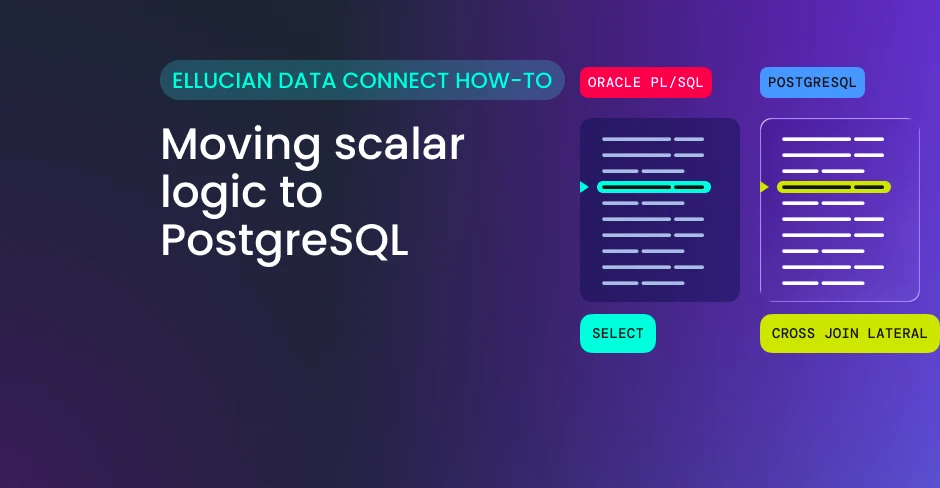
How to replace Oracle scalar functions with PostgreSQL CROSS JOIN LATERAL in Ellucian Spec APIs
When an Ellucian Spec API written for Oracle calls scalar functions directly from its SELECT list, migrating the query to PostgreSQL can break because those Oracle functions are not available in the PostgreSQL implementation. The SQL still needs to calculate the same value for each Banner record, so the function logic has to be reproduced […]
higher-education, Data Connect tips, Data Connect, Ellucian Ethos, tips, Banner, Banner SaaS, Ellucian, Ellucian SaaS
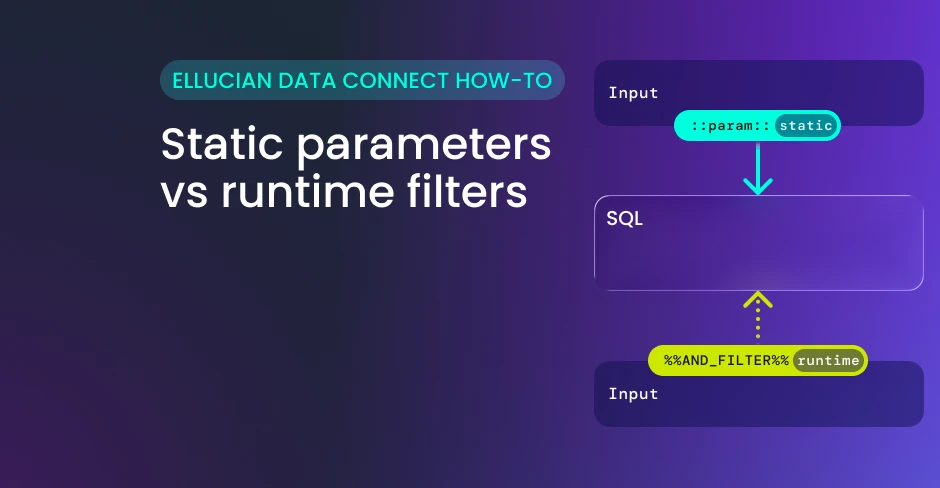
How to choose between ::param:: and %%AND_FILTER%% in Ellucian Spec API SQL
When an Ellucian Spec API SQL query needs parameter values or criteria based filtering, choosing between ::param:: and %%AND_FILTER%% determines what kind of SQL substitution is required. ::param:: supplies a value at a predefined position in the SQL, while %%AND_FILTER%% represents an optional SQL condition generated from the request criteria. Using the wrong mechanism can […]
higher-education, Data Connect tips, tips, Data Connect, Banner, Banner SaaS, Ellucian, Ellucian SaaS, JavaScript
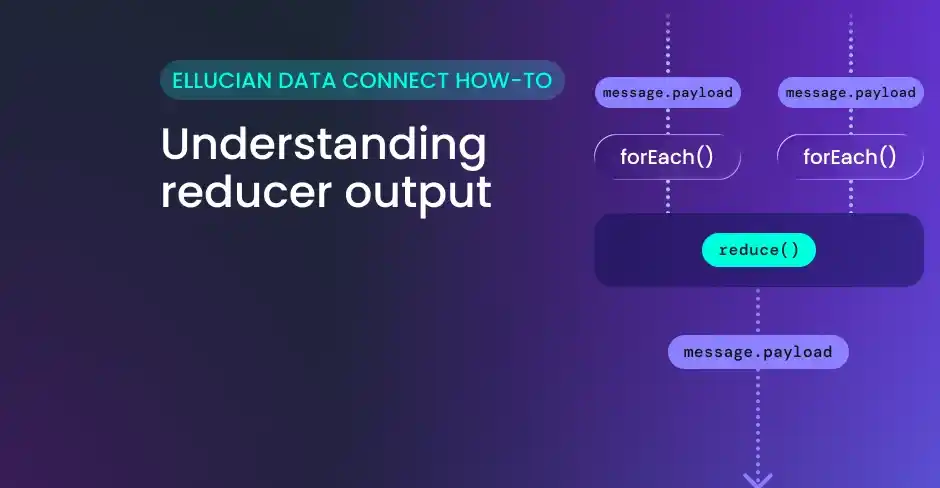
How to access reducer results in message.payload in Ellucian Data Connect
When an Ellucian Data Connect forEach is followed by a reducer, a JavaScript step that reads message.payload as if it still had the per iteration shape can get undefined or the wrong object instead of the expected array of results. The reducer stores iteration payloads under the configured accumulator path, so the next step must […]
higher-education, Data Connect tips, tips, Data Connect, code conversion, Banner, Banner SaaS, Ellucian, Ellucian SaaS, Oracle, JavaScript
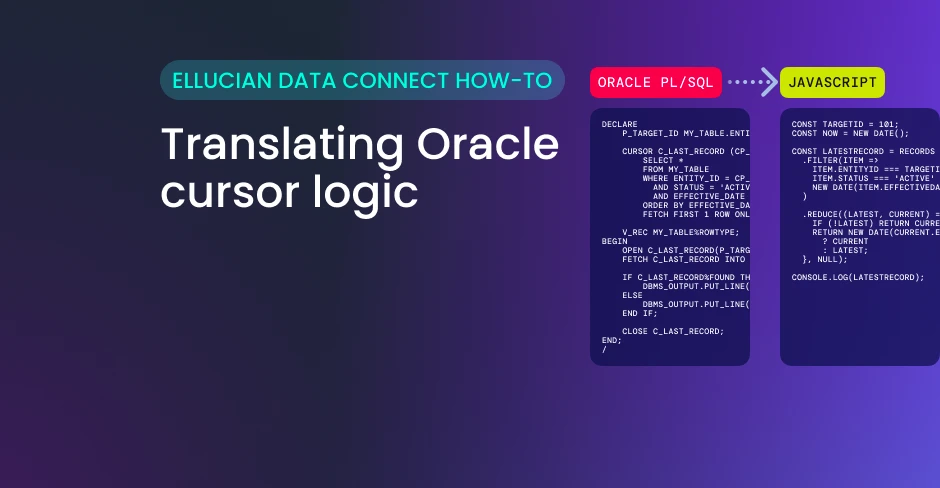
How to translate Oracle cursor logic into JavaScript filter/reduce in Ellucian Data Connect
When an Ellucian Data Connect implementation moves Banner PL/SQL processing into JavaScript, Oracle cursor logic that selects the latest non-terminated effective-dated job record before a cutoff date has to preserve the same record-selection rules. In the workflow covered here, JavaScript filter() reproduces the Oracle eligibility conditions, while reduce() selects the qualifying record with the greatest […]
higher-education, Data Connect tips, tips, Data Connect, Banner, Ellucian, Banner SaaS, Ellucian SaaS, JavaScript
How to accumulate audit messages across Ellucian Data Connect pipeline steps
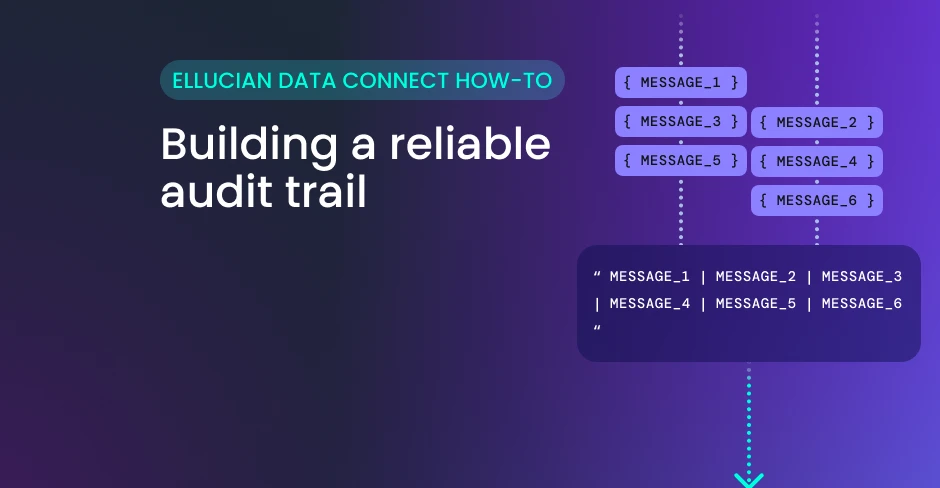
When an Ellucian Data Connect pipeline processes a candidate through multiple steps and sub-pipelines, each stage may need to add an audit message without overwriting messages created earlier. In the workflow covered here, storing the audit trail as a plain auditMessage string separated with ” | “ lets the pipeline preserve the message sequence, carry […]
higher-education, Data Connect tips, tips, Data Connect, Banner SaaS, Banner, Ellucian, Ellucian SaaS, optimization, JavaScript
How to prevent JSON.stringify failures with large payloads in Ellucian Data Connect
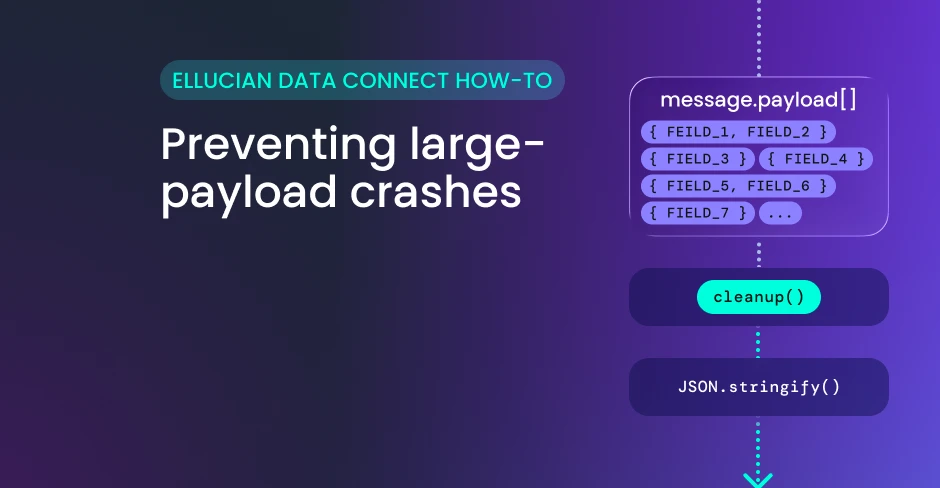
An Ellucian Data Connect pipeline can work normally with a small test dataset and then fail in production when JSON.stringify() processes a much larger accumulated payload. In this production case, processing about 20 records worked as expected, while a production run with 500+ employees could stop with a cryptic V8 engine error and no useful […]
higher-education, Data Connect tips, tips, Ellucian Ethos, Data Connect, Banner SaaS, Banner, Ellucian SaaS, Ellucian
How to use a nil GUID to insert Banner job-detail records through Ellucian Ethos
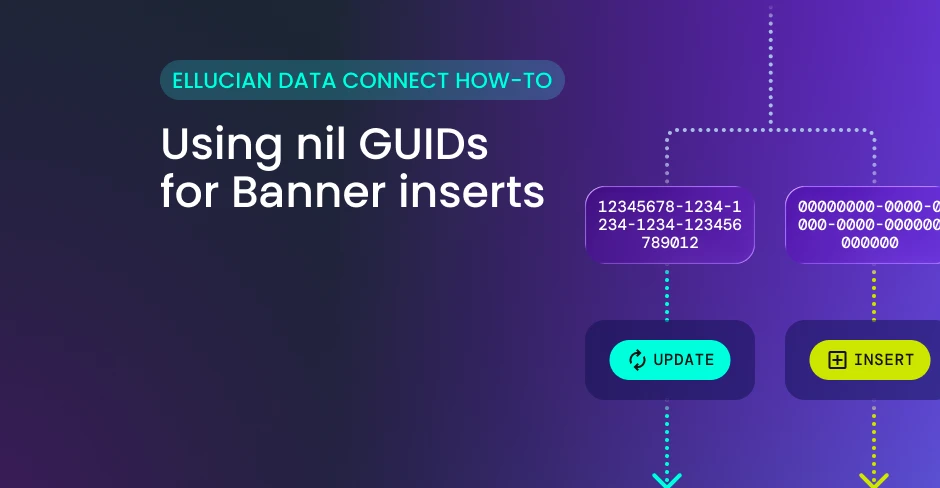
When an Ellucian Data Connect integration needs to create a new Banner employee job-detail record through the Ethos employee-job-details/batches endpoint, the request still requires an id even though the new record does not yet have a real GUID. This creates a practical implementation question: what value should the batch payload send when the operation is […]
higher-education, Ellucian, Ellucian SaaS, Ellucian Student, Data Connect, Banner, Banner SaaS, Data Connect tips, tips, Ellucian Ethos
How to configure output files in Ellucian Data Connect Framework v3.1
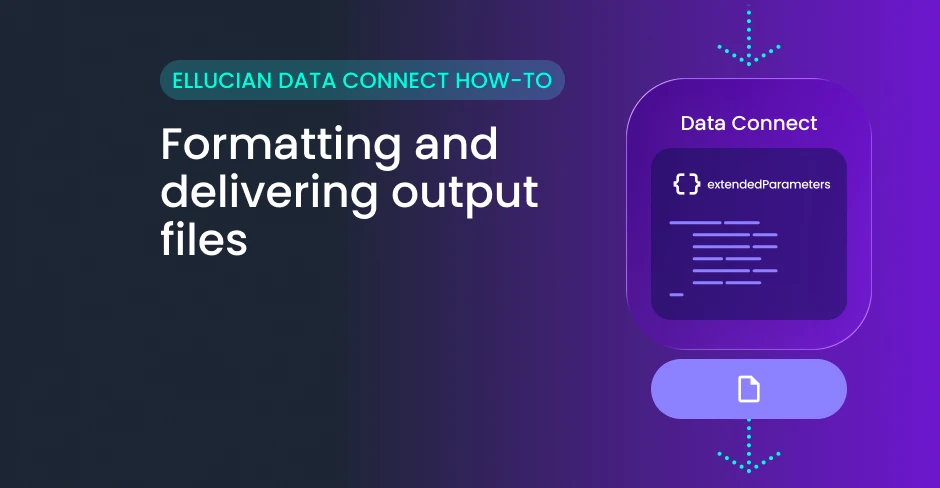
Producing the correct data is only part of an Ellucian Data Connect integration. The result also has to reach the receiving system in the format that system expects. A report, audit, or error file may require a specific delimiter, extension, header row, filename, or delivery destination. When multiple integrations need the same kinds of output […]
higher-education, Ellucian, Ellucian SaaS, Data Connect, Ellucian Student, Banner, Banner SaaS, Ellucian Ethos, Data Connect tips, tips
How to validate Data Connect parameters against Ellucian Banner reference data
An Ellucian Data Connect pipeline may accept reason codes, employee classifications, or other runtime values that represent reference data maintained in Banner. These values cannot always be validated locally. A parameter may be present and have the correct format, but that still does not prove that the code actually exists in Banner or belongs to […]
higher-education, Ellucian, Ellucian SaaS, Ellucian Student, Data Connect, Banner, Banner SaaS, Ellucian Ethos, Data Connect tips, tips
How to validate parameters in Ellucian Data Connect Framework v3.1
Ellucian Data Connect is designed to support integrations that move and transform data between systems. Framework v3.1 is version 3.1 of Ellucian’s extensibility framework for Data Connect pre-built integrations. It provides reusable pipeline and sub-pipeline patterns, together with defined extension points for integration-specific behavior. The framework provides reusable baseline behavior for common integration concerns, so […]
higher-education, Ellucian, Ellucian SaaS, Data Connect, Ellucian Student, Banner, Banner SaaS, Ellucian Ethos, Data Connect tips, tips
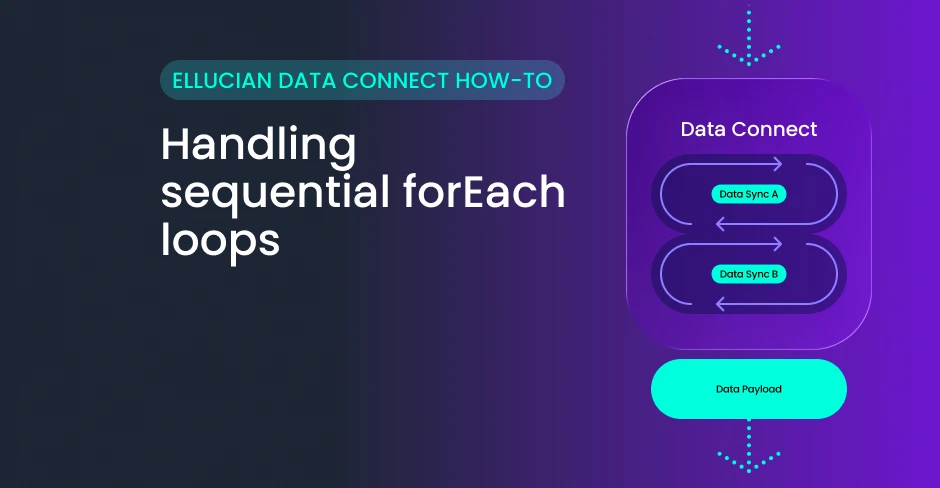
How to handle sequential forEach loops in Ellucian Data Connect
Some Ellucian Data Connect pipelines need to process two related collections in sequence, but nested forEach loops are not supported. This post explains how to complete the first loop, preserve its payload, run a second loop, and merge the second-loop results back into the original records. It is part of our Ellucian Data Connect tips and implementation patterns series and belongs to its Pipeline […]
higher-education, Ellucian, Ellucian SaaS, Data Connect, Banner, Banner SaaS, Ellucian Ethos, Ellucian Student, Data Connect tips, tips
Ellucian Data Connect tips and implementation patterns
Reimplementing on-premises integration logic in Ellucian Data Connect is rarely a direct code conversion. Existing processes may rely on sequential operations, shared message state, reducer behavior, runtime parameter rules, Banner and Ethos API operations, legacy Oracle logic, Spec API SQL, report formatting, and file-delivery behavior that must be represented explicitly in a Data Connect pipeline. […]
AWS SCT, database-conversion, AWS, database-migration, Ora2Pg, Oracle to PostgreSQL, Oracle, PostgreSQL, tips
Database migration with AWS SCT: Solutions for typical conversion issues
Migrating Oracle databases to PostgreSQL or MySQL with AWS Schema Conversion Tool (AWS SCT) can present a range of challenges, from unsupported data types to limitations in automated code conversion and potential performance issues. AWS SCT offers powerful capabilities to automate these migrations, but it may not always deliver optimal results or handle complex Oracle […]

Database migration with SSMA: Handling typical conversion issues
Migrating databases from Oracle to Microsoft SQL Server can be a complex endeavor, especially when it comes to dealing with differences in schema structures, data types, and specific SQL clauses. The SQL Server Migration Assistant (SSMA) is a robust tool designed to automate these migrations and minimize manual effort. However, SSMA might not always produce […]

Handling null and empty string differences in Oracle and PostgreSQL
When migrating from Oracle to PostgreSQL, one of the most important differences to consider is the treatment of null and empty string values. In Oracle, null and empty string are treated as the same entity, but in PostgreSQL, they are distinct. Failing to account for this distinction during migration can lead to logical errors and […]