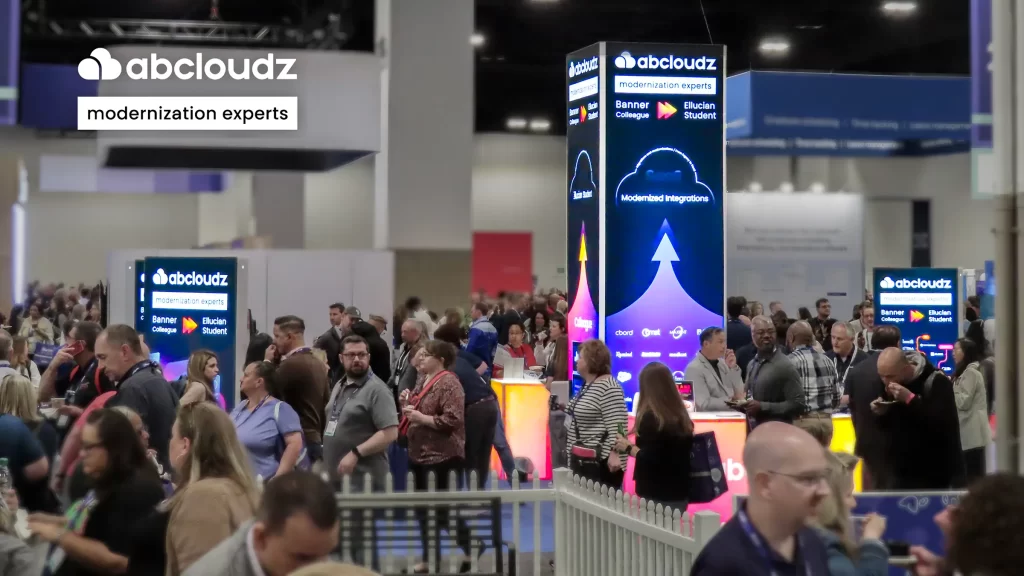
During Ellucian Live 2026, our team had the chance to run a live survey.
Not a form. Not a poll. A real one.
We spoke with more than 1,000 people from institutions, partner organizations, vendors, and teams working across the higher education technology ecosystem. The same concerns kept coming up again and again.
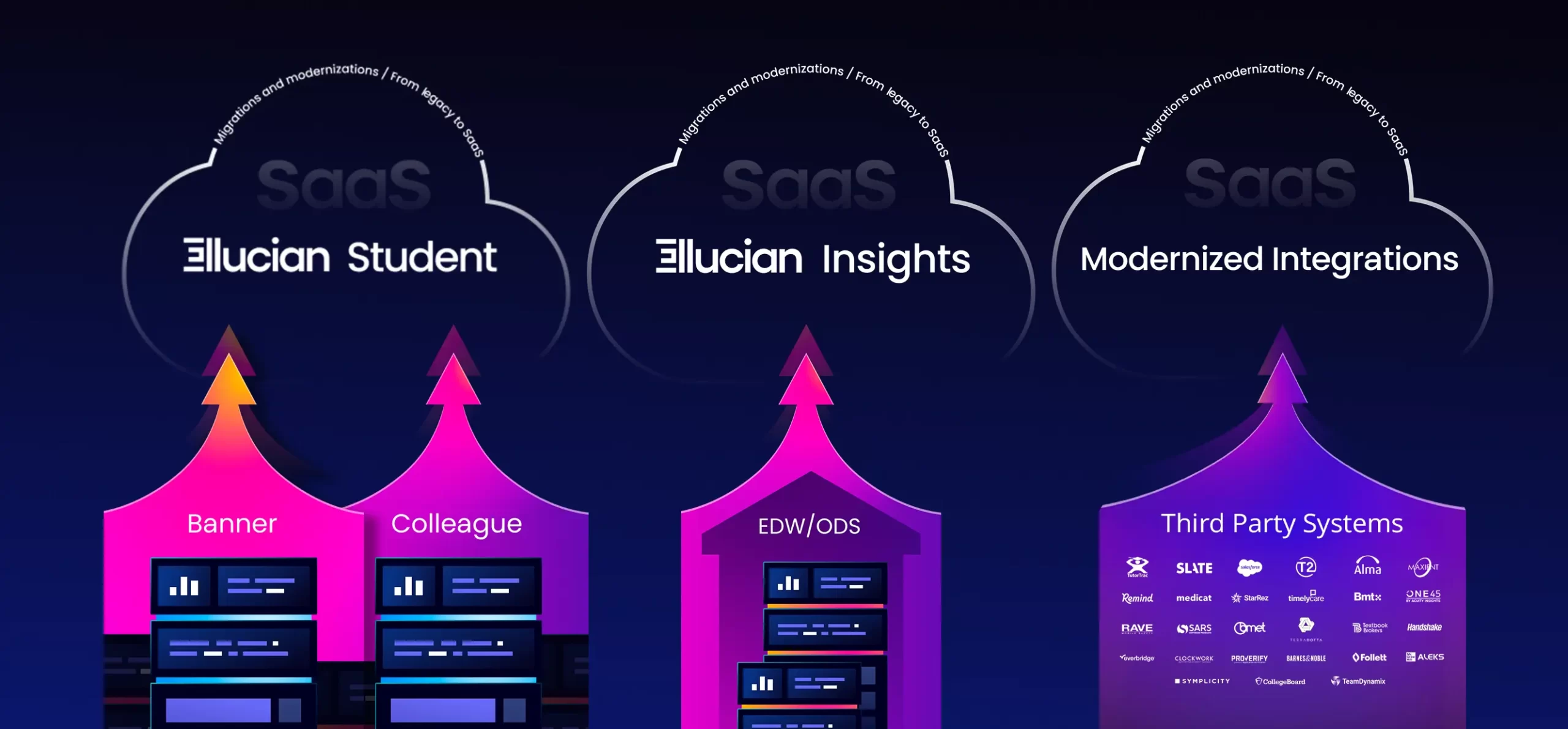
The strongest pattern was clear: institutions want practical answers about modernization to Ellucian Student. How to move forward without disrupting what already works. How to evaluate customizations. How to modernize integrations. How to estimate the real scope of work. How to decide whether to start with discovery or a full project. How to choose the right modernization partner.
If your institution is thinking about Ellucian Student, you may recognize your own questions in this list and find practical recommendations for how to approach them.
Below are the seven concerns we heard most often, along with the answers we gave.
How to move to Ellucian Student without breaking what already works
This was one of the most common concerns behind many other questions.
Most institutions understand the direction of Ellucian Student and SaaS. They want a safe, credible path forward. They want to protect the student services, business processes, and institutional outcomes their campus depends on every day.
Our answer was straightforward: start with visibility, then build the plan.
Before you plan the move, get clear on what your environment is actually doing today. Identify the processes that are truly business-critical. Separate the outcomes you need to preserve from the legacy implementation details that can be redesigned.
This is where Modernization Studio becomes important. It helps make the current environment visible before major modernization decisions are made. Instead of relying on assumptions, teams can scan the environment, inventory key objects and dependencies, see where integrations and customizations live, and use that evidence to define the modernization path.
The goal is not to carry every legacy mechanism forward. The goal is to preserve the institutional outcomes that matter and redesign the technical path for Ellucian Student.
Related ABCloudz services
Service: Ellucian Banner to Ellucian Student modernization
Service: Ellucian Colleague to Ellucian Student modernization
How to handle years of Banner or Colleague customizations
This concern came up repeatedly in conference conversations.
Many institutions have years of custom logic behind Banner or Colleague. That logic may live in scripts, database objects, reports, jobs, workflows, or homegrown processes. Some of it still supports real institutional needs. Some of it reflects old decisions that no longer need to stay in place.
The right approach is to treat customizations as decisions, not as baggage.
Each customization needs a clear disposition. Some should be preserved in a new form. Some can be simplified. Some can be replaced by supported platform capabilities. Some should be retired. The key is to make those decisions based on evidence, not habit.
Modernization Studio helps with this by making customization-heavy environments easier to understand. It can support the inventory process, surface hidden logic, and give teams a clearer basis for deciding what to keep, redesign, replace, or retire.
This changes the conversation. Instead of asking “What happens to everything we built?” the institution can ask a better question: “Which business outcomes still matter, and what is the best Ellucian Student-ready way to support them?”
Related ABCloudz resources
Case study: Rebuilding module outcome automation for Ellucian Banner SaaS
Case study: Rebuilding legacy student logic for Ellucian Banner SaaS
Case study: Modernizing legacy student status automation for Ellucian Banner SaaS
How to modernize third-party integrations for Ellucian Student
Integrations were one of the clearest modernization pain points at the conference.
Institutions know that the ERP is only part of the picture. Around Banner and Colleague sits a larger ecosystem of third-party systems, point-to-point flows, file exchanges, jobs, scripts, and timing assumptions that have built up over time. When modernization to Ellucian Student begins, these integrations become one of the first places where real complexity appears.
Our answer was consistent: start with the business outcome, then design the supported SaaS path. Many legacy integrations were built for an on-premises world, where direct database access, local jobs, custom scripts, and tightly coupled processes were often part of the integration model. In Ellucian SaaS, that operating model changes. Integration design needs to move toward supported access and orchestration patterns, with Ellucian Data Connect and Ethos APIs serving as the core modernization path in many cases.
This is also where Integration Knowledge Hub becomes especially relevant. It is our AI-powered answer to the repeated discovery problem in third-party integration modernization. It helps teams create a stronger starting point by organizing knowledge across sources, reducing repeated research, and making integration knowledge reusable across delivery teams and institutions instead of locking it inside one project.
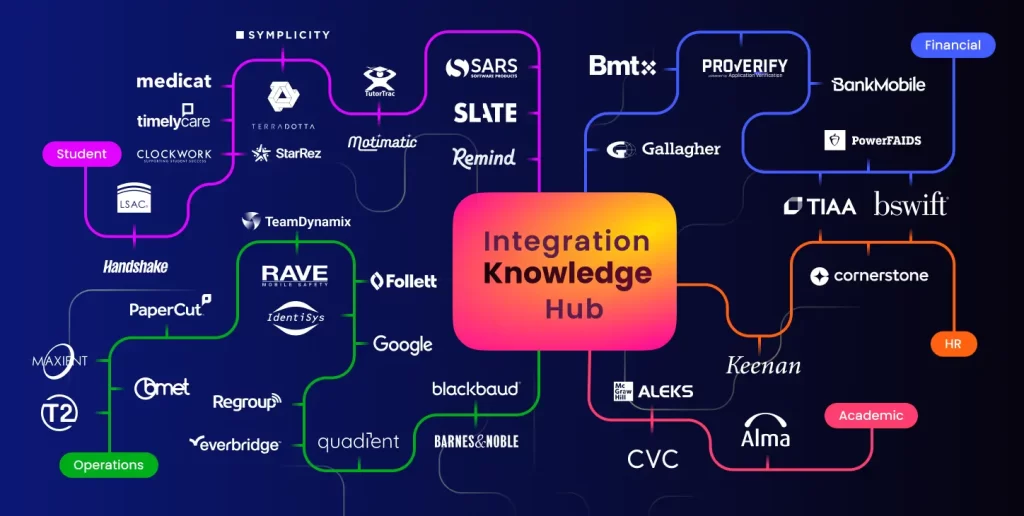
For institutions trying to estimate scope, budget, and risk, that reusable knowledge can make the integration work much easier to understand before delivery begins.
Related ABCloudz resources
Service: Modernize integrations with Ellucian Data Connect and Ethos
Blog post: Integration Knowledge Hub AI-powered integration delivery
Case-study: Banner to Salesforce EDA integration
Case-study: Banner to Follett bookstore platform integration
Case-study: Banner to ClockWorks integration
Case-study: Colleague to BMTX BankMobile integration
Case-study: Colleague to Barnes & Noble Adoption integration
Case-study: Colleague to Maxient integration
More Banner and Colleague integration case studies
How to include jobs, reports, and surrounding logic in the Ellucian Student modernization plan
A modernization plan for Ellucian Student needs to look beyond the core ERP.
Institutions also need to account for scheduled jobs, operational reports, batch processes, scripts, reporting layers, and other surrounding logic that supports day-to-day work. These components may sit outside the central ERP conversation, but they often shape the real modernization effort.
Our answer is to bring this logic into scope early.
Jobs, reports, and related logic should be inventoried during discovery. Teams need to understand which items are still business-critical, which ones can be redesigned, which ones should move to supported target-state patterns, and which ones can be retired.
Modernization Studio helps here as well. It gives teams a way to inspect the current environment, surface dependencies, identify related objects, and connect surrounding logic to the broader modernization roadmap.
This is especially important when jobs, reports, and scripts are tied to integrations or custom processes. Leaving them for later can create avoidable rework. Bringing them into the discovery and planning phase gives the institution a more complete view of what modernization to Ellucian Student will actually require.
Related ABCloudz services
Service: Modernize Cognos and Argos to IRT
Service: ODS / EDW migration to Ellucian Insights
Service: Automic to EnterpriseSCHEDULE modernization
How to estimate scope budget and timeline before the full picture is clear
This may have been the most practical question of the event.
Institutions wanted realistic answers. How big is this going to be? How long will it take? What will it cost? Can we understand the effort before committing to a full modernization program?
Our answer was clear: create the estimate in stages, starting with discovery.
A credible modernization estimate depends on current-state visibility. Integration volume, customization complexity, hidden jobs, reporting dependencies, scripts, and future-state choices all affect scope, budget, and timeline.
For many institutions, this is not just a technical planning issue. It is also a budget and governance issue. Higher education teams often need to define project scope, justify funding, prepare approvals, and plan procurement long before delivery can begin. If the modernization scope is unclear, it becomes difficult to defend the budget, explain the timeline, or decide whether the institution is ready to move forward. That is why discovery has to produce more than a general assessment. It needs to create the evidence needed for budget conversations, procurement planning, and realistic internal decision-making.
This is where our 12-step Migration and Modernization Methodology and Modernization Studio work together. The methodology gives structure to the full journey. Modernization Studio gives teams the current-state evidence needed to make roadmap and budget conversations meaningful.
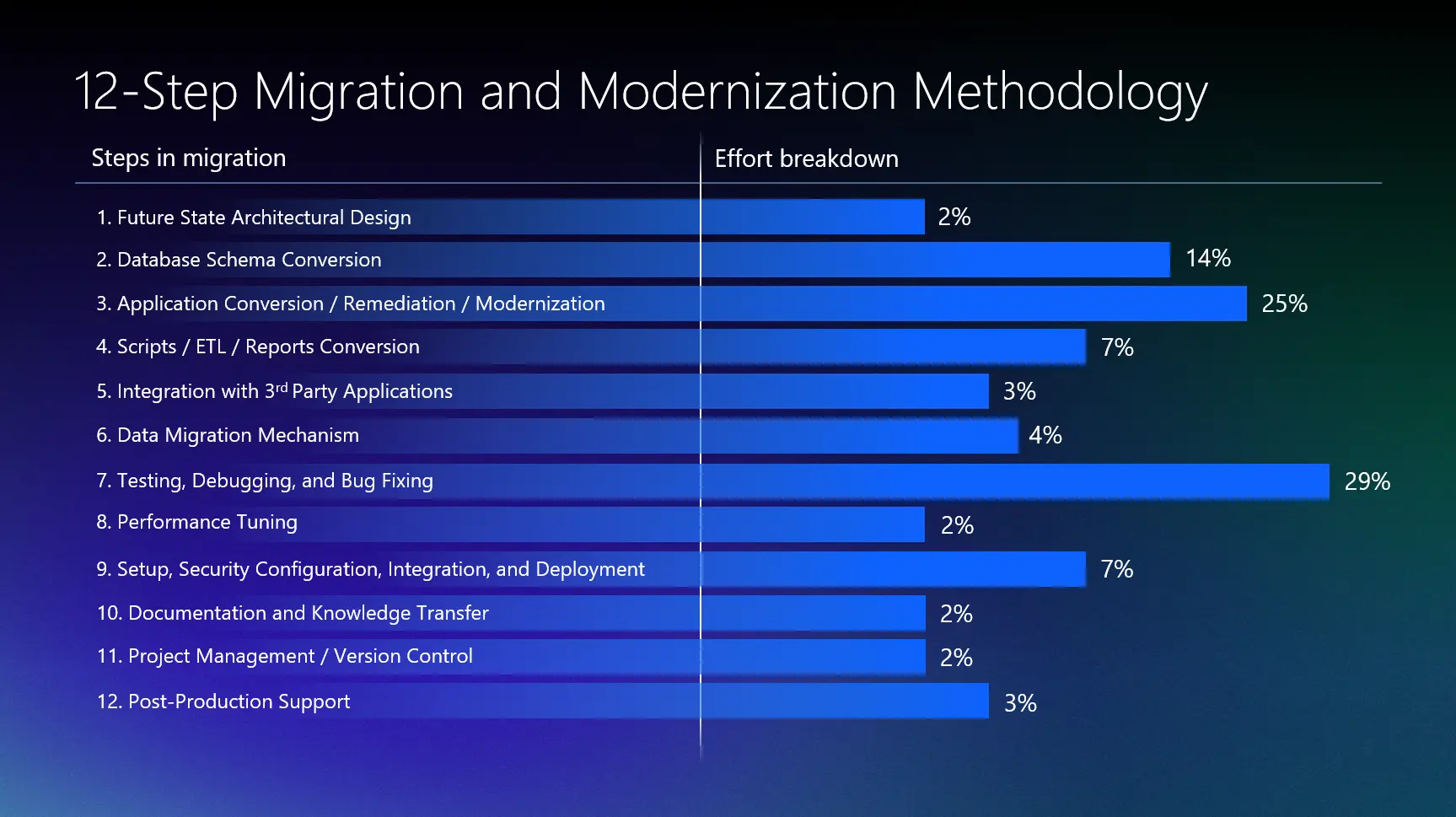
The first estimate should define the discovery effort. The next estimate should be based on what discovery reveals. That approach gives institutions a more realistic planning model and reduces the risk of committing to a scope that was never fully understood.
Integration Knowledge Hub also supports this planning conversation for third-party integrations. When teams can build on reusable integration knowledge instead of starting from scratch, they can clarify integration scope faster and reduce repeated research across similar modernization work.
Related ABCloudz resources
Blog post: Introduction to the 12-step Migration and Modernization Methodology
Blog post: Part 1: Workload Definition Shapes the Modernization Roadmap
Blog post: Part 2: Current and Future State Architectures
Blog post: Part 3: Analyzing Migration Project Efforts and Crafting the Project Plan
Blog post: Part 4: Migration Solution Document Capturing the Project Roadmap
Do we need a full project now or can we start with discovery?
This question came up more often than many institutions say out loud.
Our answer was simple: yes, you can absolutely start with discovery. In many cases, that is the smartest first move.
A discovery-first engagement gives an institution what it needs most at that stage: visibility into the current environment, a clearer picture of complexity, a better sense of risk, and a practical foundation for future decisions. That is not a delay. It is a way to make the next decision with evidence.
This is why ABCloudz supports discovery as a dedicated engagement, not only as the opening step of a larger project. We can help institutions assess the current environment, identify the main effort drivers, surface dependencies, and build a modernization roadmap before they commit to full delivery.
In this scenario, Modernization Studio becomes the practical foundation for discovery. It helps us scan the environment, surface dependencies, identify custom logic, map integration points, and create the technical evidence needed for a realistic modernization roadmap. At ABCloudz, we have deep hands-on experience using Modernization Studio in discovery work. We have applied it across hundreds of real modernization projects in the Ellucian ecosystem and continue to use it as a core part of our modernization approach.
When the time comes to move into a broader modernization program, that discovery work pays off immediately. The institution already has a clearer view of scope, risk, budget logic, sequencing, and the decisions that need to be made next.
How to choose the right partner for Ellucian Student modernization
Another question we heard often at Ellucian Live was direct and fair: what makes ABCloudz different from other Ellucian partners? Our answer starts with the combination of two things: deep modernization engineering and real higher education operating knowledge.
On the technical side, ABCloudz brings more than 20 years of modernization practice. Across that work, our team has helped deliver more than 200 modernized workloads per year on average.
That experience goes beyond project delivery. We understand modernization at the tooling level. While our competitors increasingly rely on tools such as Modernization Studio, ABCloudz creates tools of this class. Our track record proves it. Our SQL dialect conversion technology was acquired by Microsoft in 2005 and became SQL Server Migration Assistant. Later, with AWS’s acquisition of DB Best in 2021, that same modernization engineering legacy became part of AWS Schema Conversion Tool.
This is the level of technical foundation we bring to Ellucian Student modernization. But technical depth is only one side of the equation.
The other side is higher education context. Over more than 10 years of work in the higher education ecosystem, our team has built a practical understanding of how institutions operate, how campus processes depend on surrounding systems, and how modernization decisions affect students, staff, finance, advising, reporting, and day-to-day operations.
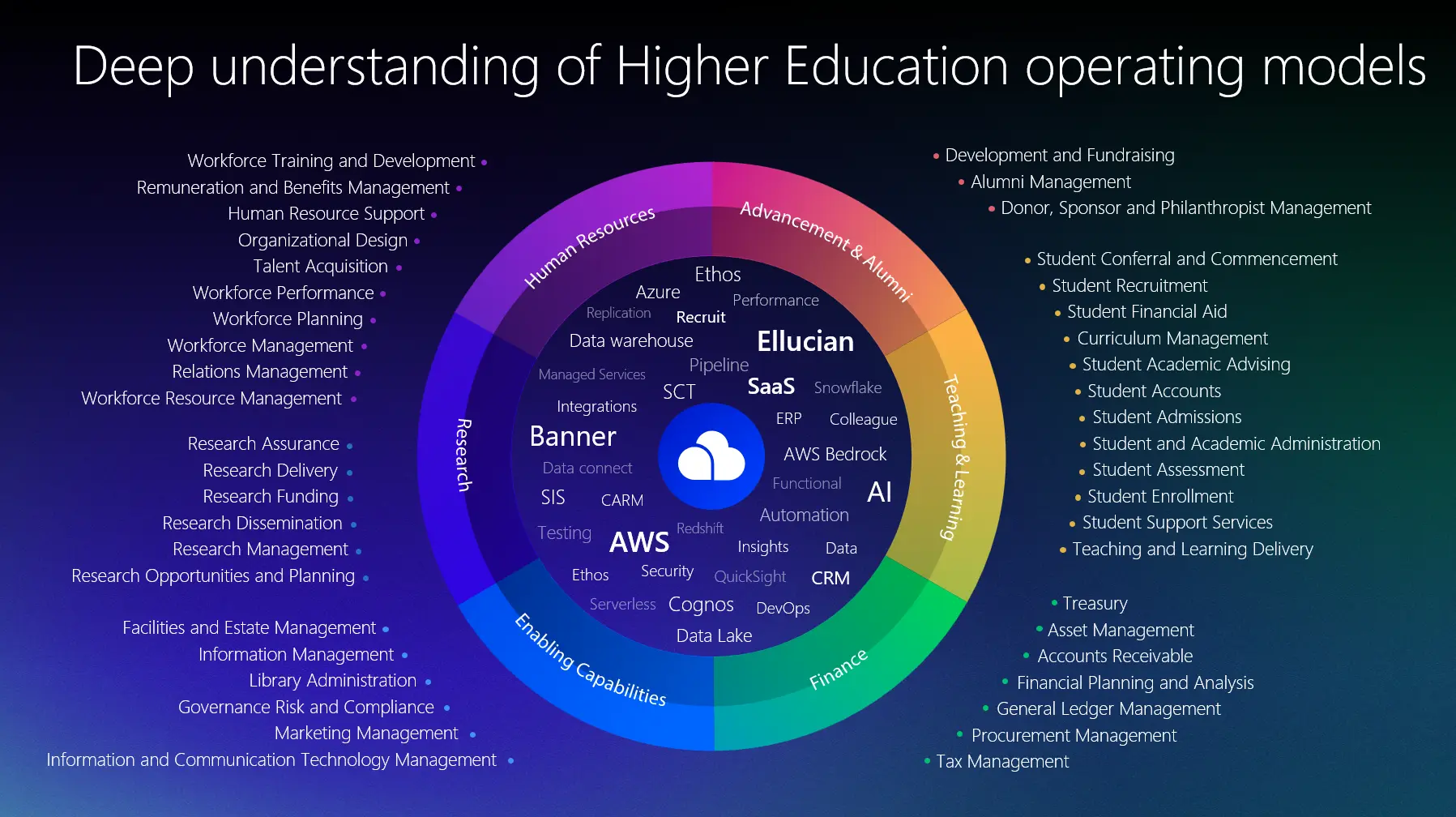
We believe a strong modernization partner should bring both sides: the engineering depth to handle complex technical transformation and the higher education experience to understand what those technical decisions mean in practice.
Related ABCloudz resources
Get practical answers before modernization begins
Ellucian Live 2026 made one thing clear: institutions are asking smart, practical questions about modernization to Ellucian Student.
Those questions deserve practical answers grounded in real delivery experience. ABCloudz brings that experience across Banner and Colleague modernization, third-party integration redesign, customization analysis, technical discovery, and modernization roadmap development.
We help institutions move from uncertainty to a clearer plan: what needs to change, what can stay, what should be redesigned, and what the next step should look like.
If your team is working through similar questions, now is a good time to start the conversation. Talk to ABCloudz about your path to Ellucian Student modernization.