Developing connected audio hardware is only the beginning. Headphones, speakers, wearables, and other connected audio devices also need companion apps, Bluetooth connectivity, firmware integration, OTA (Over-the-Air) update workflows, backend systems, and embedded engineering to become complete products that manufacturers can deliver, maintain, and support.
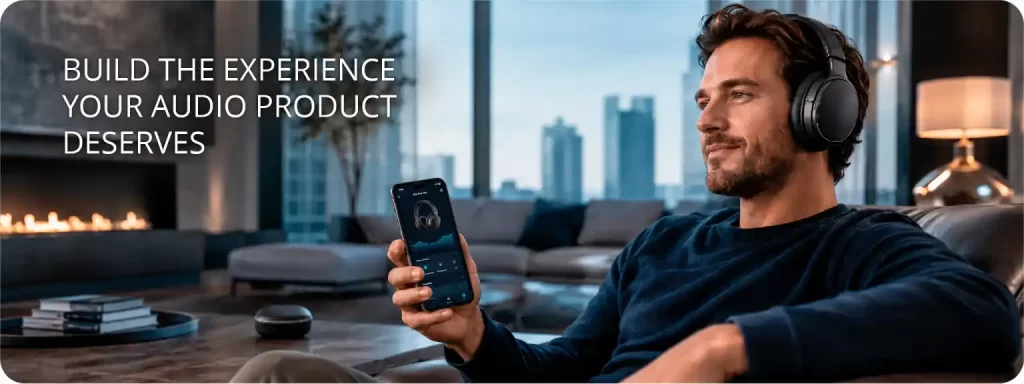
Users expect reliable pairing, intuitive device controls, personalization, and clear feedback about what the hardware is doing.
Manufacturers face a broader engineering challenge. The applications have to remain synchronized with physical devices, connectivity has to behave reliably across platforms, firmware needs a safe release path, and backend services have to support the product after it reaches customers.
ABCloudz works across these layers.
Our experience includes native companion apps for audio devices, Bluetooth Low Energy integration, custom device communication, OTA firmware delivery, backend services, embedded firmware, Bluetooth SDKs, and selected hardware engineering.


What we build for connected audio products
Different products need different parts of this stack. We can work with an existing device and SDK, take responsibility for the application and cloud layers, or go deeper when the project requires changes on both sides of the Bluetooth connection.
Mobile companion apps
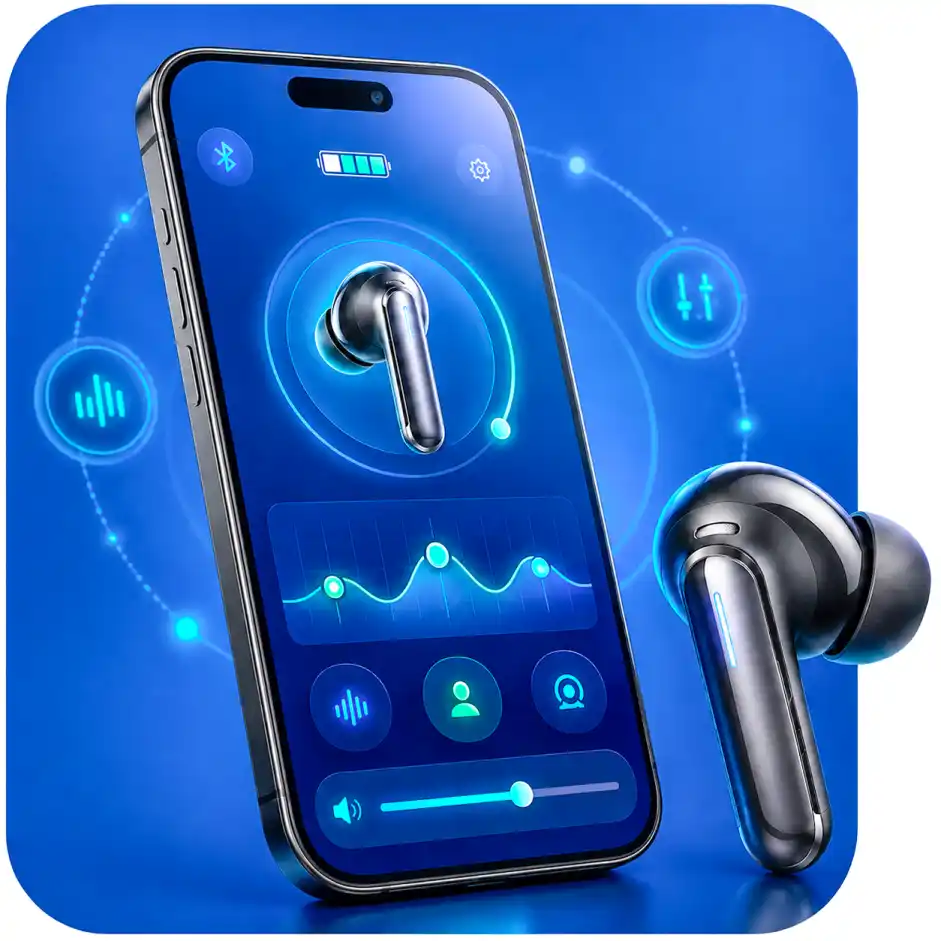
We build native iOS and Android applications for device setup, control, personalization, account functionality, and ongoing product support. Our audio projects have included Bluetooth discovery and pairing, EQ controls, sound profiles, volume and playback controls, timers, battery information, firmware status, and device state synchronization.
Bluetooth connectivity
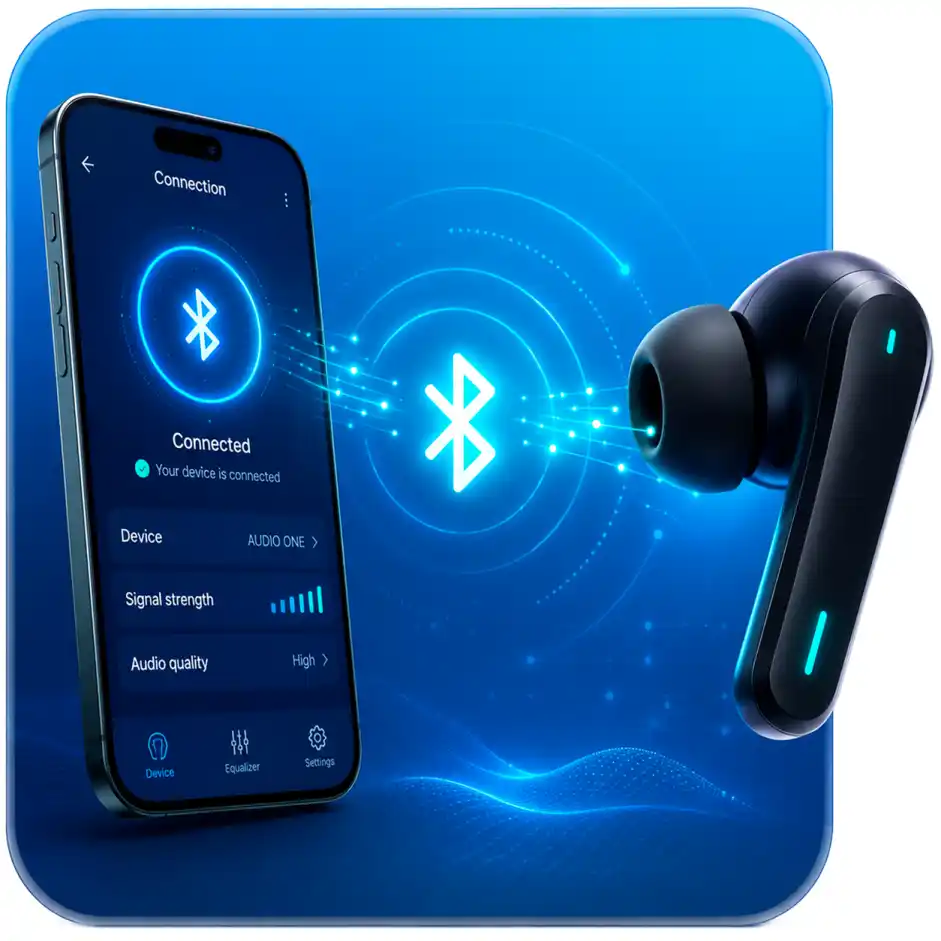
Connected-device applications need more than a successful initial connection. We work with device discovery, pairing, reconnection, command exchange, callbacks, state synchronization, and custom BLE communication. When a product does not have a complete mobile SDK, we can work with the protocol itself or build a reusable integration layer around it.
Device control and personalization
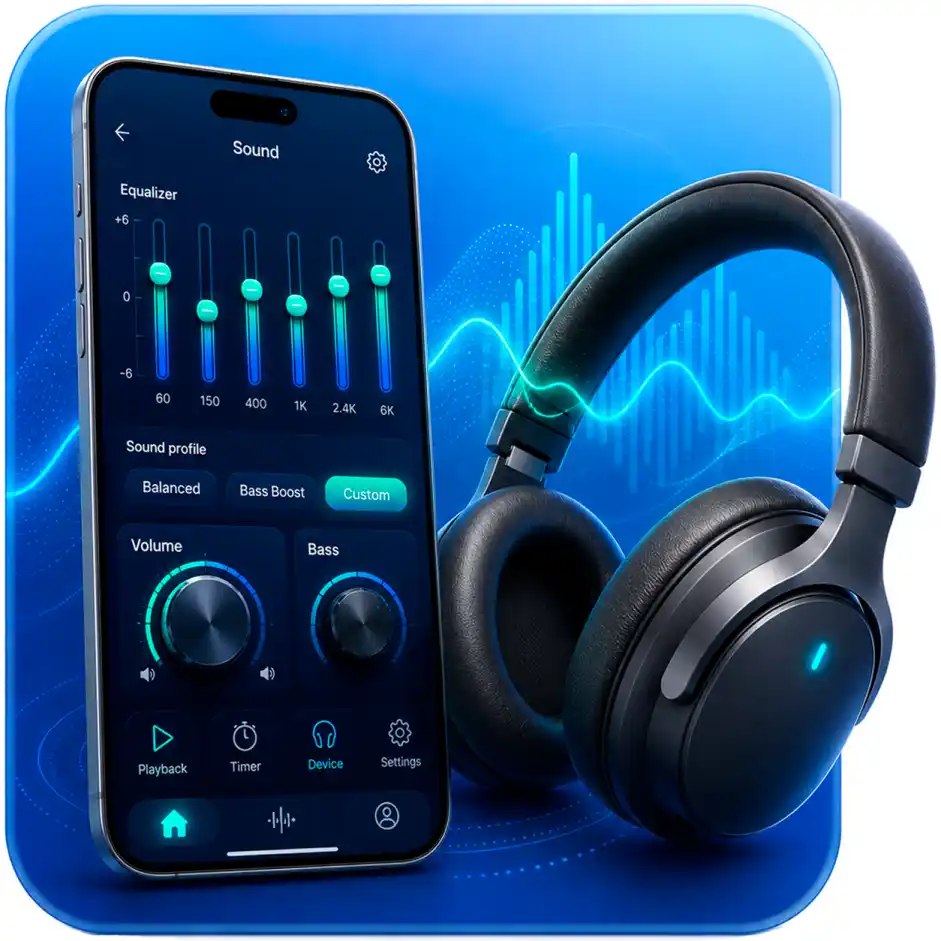
The companion app is often where customers experience much of the product’s configurable behavior. For audio devices, our work has included multi-band EQ, gain control, sound profiles, volume, bass and treble adjustments, playback controls, timers, and device-specific settings. We keep these controls synchronized with the device as users interact with it.
Firmware and OTA updates
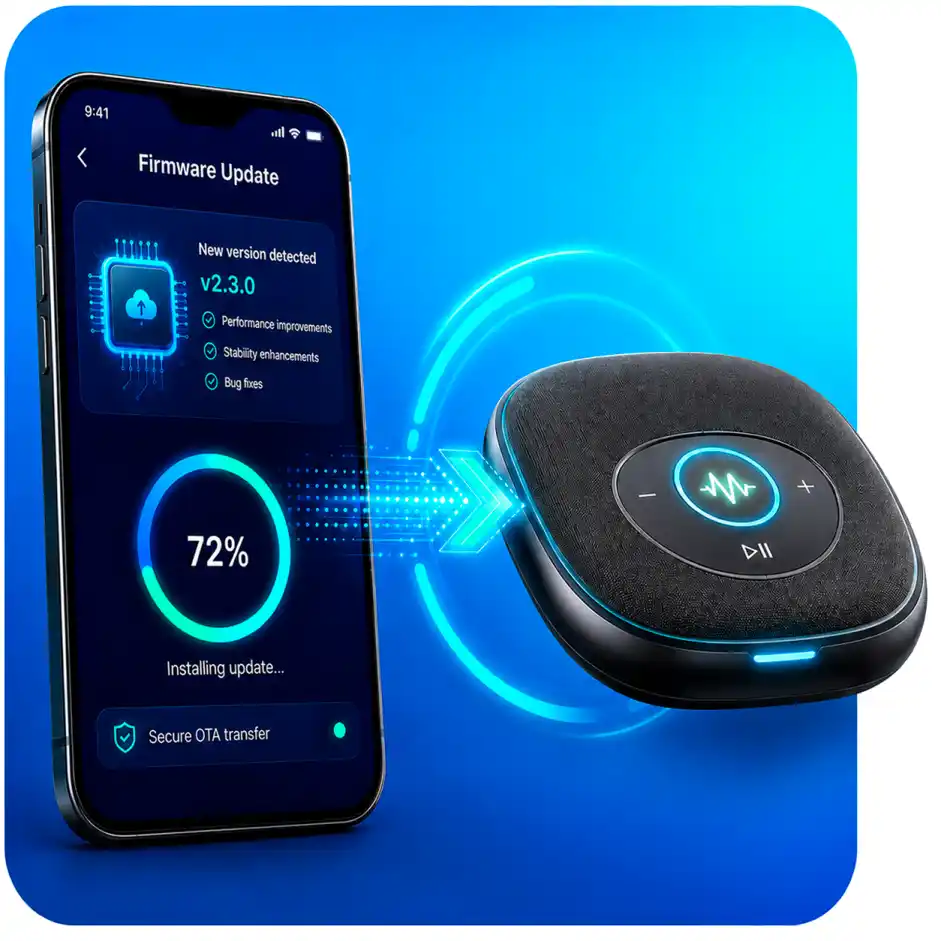
Firmware delivery becomes part of the customer experience once a connected device is in the field. We build workflows for firmware version detection, update delivery over Bluetooth, retry and failure handling, release activation, and supporting administrative tools. These workflows help manufacturers manage firmware releases without turning every update into a manual process.
Backend and cloud services
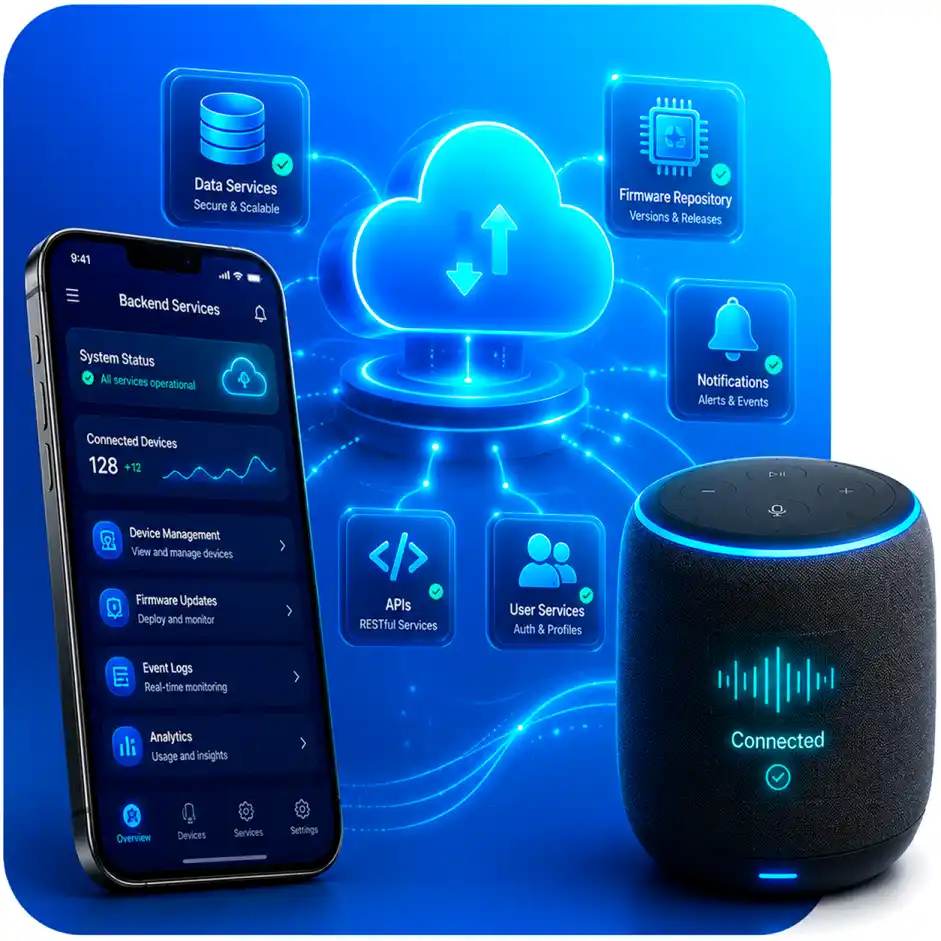
Some device capabilities require infrastructure beyond the phone. We build APIs, firmware repositories, notification workflows, administrative applications, user services, and third-party integrations that connect the mobile application with the rest of the product ecosystem. This gives product teams a central layer for managing devices, releases, users, and integrations.
Embedded and hardware engineering
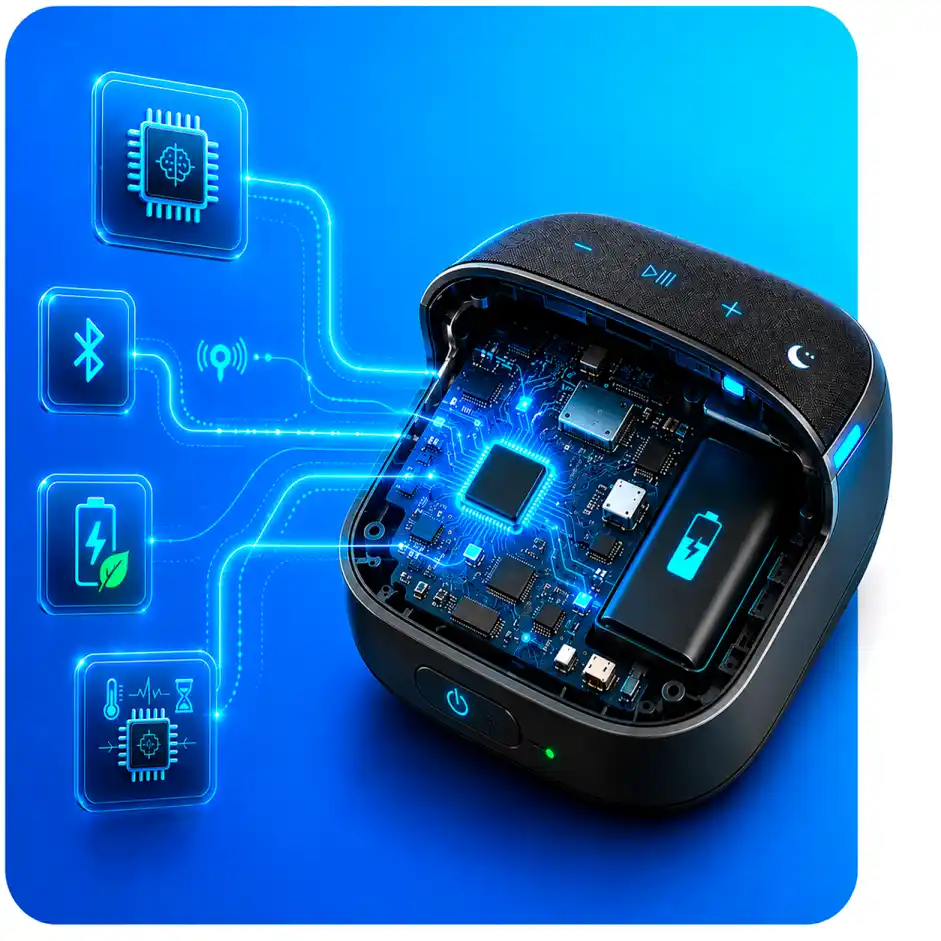
Some device capabilities require infrastructure beyond the phone. We build APIs, firmware repositories, notification workflows, administrative applications, user services, and third-party integrations that connect the mobile application with the rest of the product ecosystem. This helps address connectivity, power, and device behavior directly at the firmware and hardware level.
Two audio products, two different engineering challenges
Two of our projects show how different the software around an audio product can become.
Heavys: turning firmware updates into a managed product workflow

Heavys develops Bluetooth headphones designed around a multi-driver architecture.
ABCloudz worked on native iOS and Android applications that communicate with the headphones over Bluetooth Low Energy. The applications provide device controls including a six-band equalizer and also support firmware updates over the air. We also adapted device communication to platform-specific behavior, using request queuing on iOS and controlled delays on Android to prevent the headphones from being overloaded with commands.
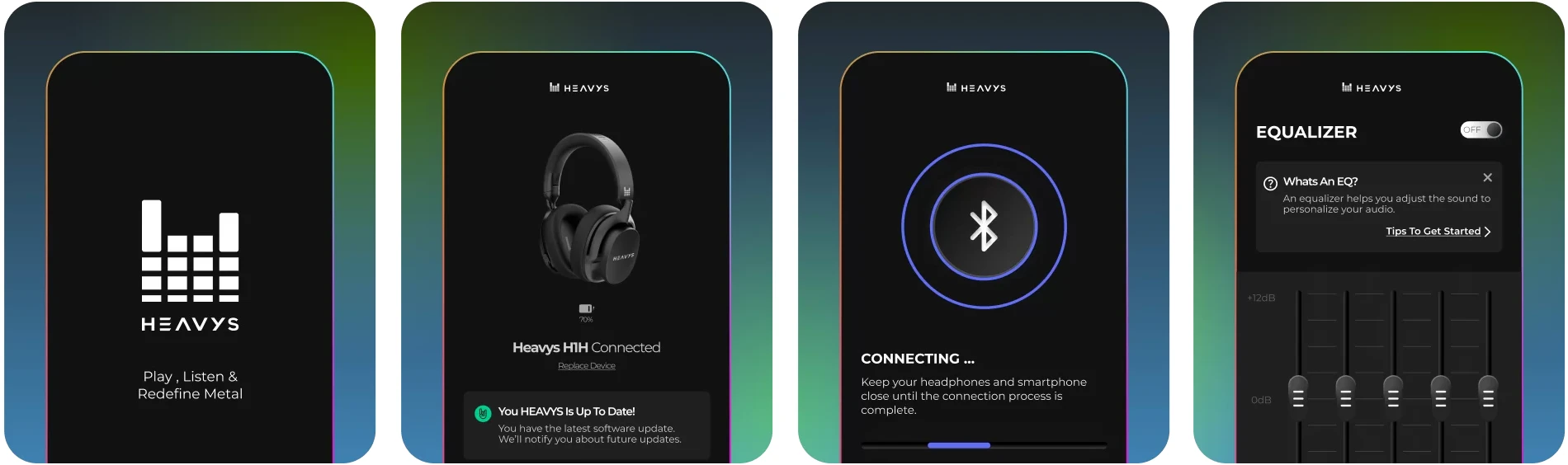
The OTA requirement went beyond transferring a firmware file from the phone to the headphones.
The solution connected several parts of the product lifecycle:
- firmware version detection on the device;
- firmware distribution through the mobile application;
- BLE transfer to the headphones;
- update and error handling;
- backend services;
- firmware build and version management;
- production release activation;
- push notifications informing users about available updates.
A web administration application allows the team to manage firmware builds, compatibility, and release status without shipping a new version of the mobile app every time firmware changes.
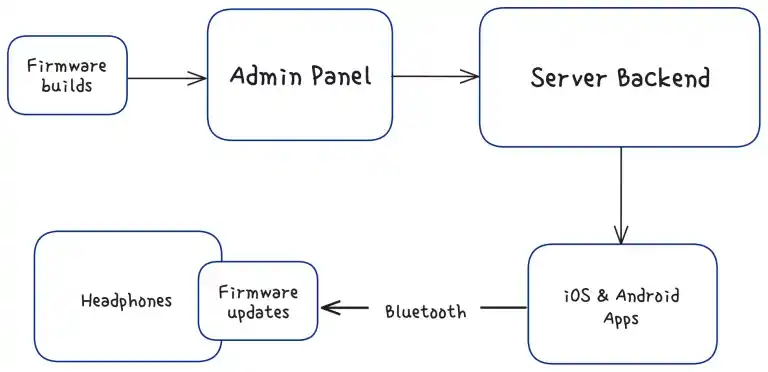
The result is a managed firmware delivery workflow connecting the headphones, mobile applications, backend, firmware repository, and release process.
Dusker: one companion app for a family of sleep audio devices

Dusker develops connected products designed to deliver audio during sleep, including Sleepbar and other devices in its product family.
ABCloudz developed native iOS and Android companion applications that communicate with the hardware through BLE.
The apps handle discovery and pairing, but the more important part of the integration happens after the connection is established.
Users can control sound profiles, EQ settings, volume, bass, treble, playback, and timers. The applications also receive information such as battery state and firmware version from the device.

Communication works in both directions. The app sends commands to the hardware, while callbacks and device events keep the application synchronized with changes happening on the physical product.
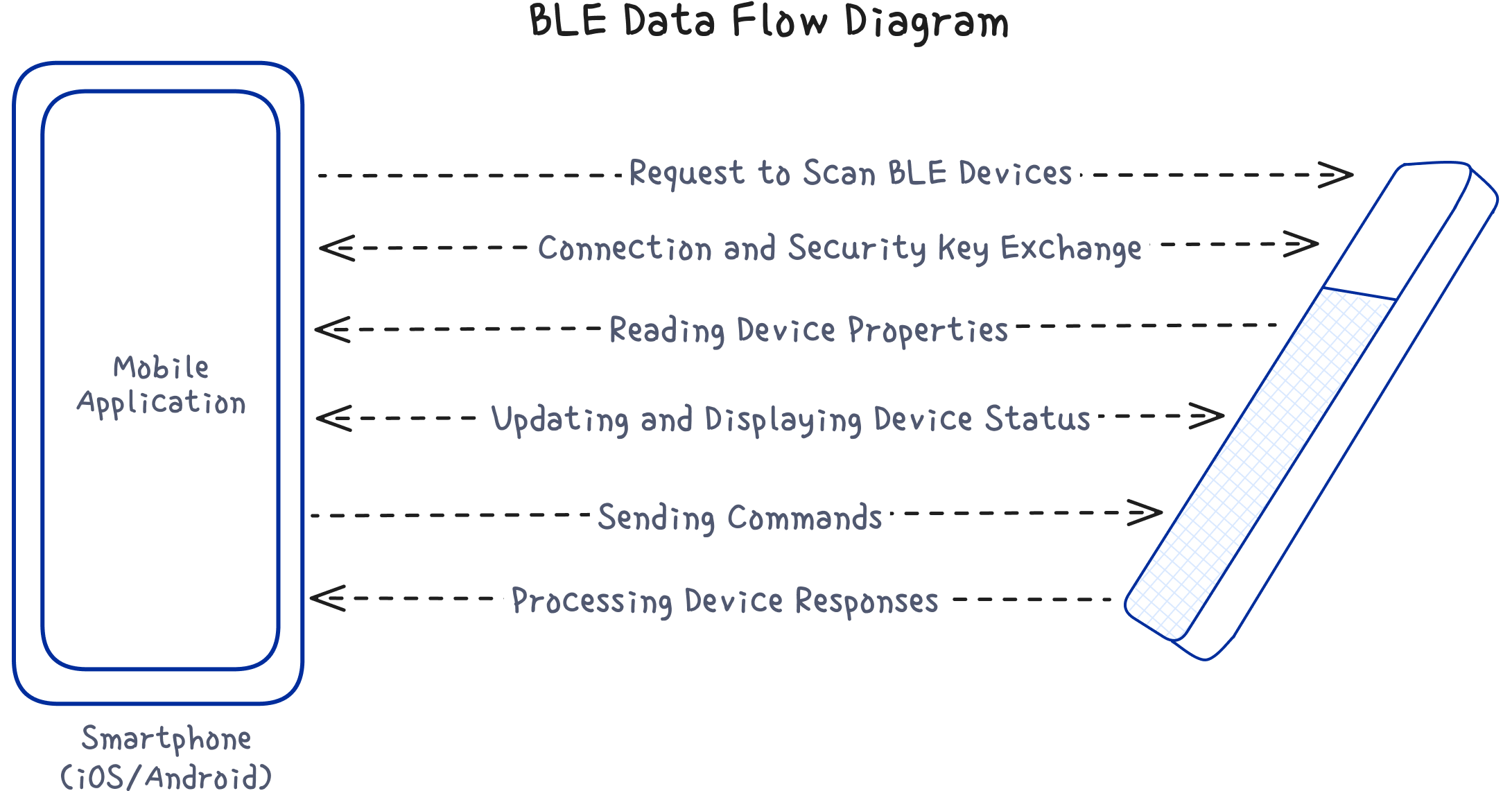
That synchronization matters. A companion app cannot treat the device as a remote API that always stays in a predictable state. Connections can disappear, users can interact with the hardware directly, and device state can change independently of the phone.
The application has to understand and continuously reconcile that state.


The engineering behind the Bluetooth connection
Heavys and Dusker are audio projects, but the engineering capabilities behind them come from a broader connected-device practice.
We have used the same underlying skills in products ranging from consumer electronics to healthcare and wearable devices.
Custom device communication
An existing vendor SDK can simplify integration, but not every device provides one. Even when an SDK exists, the application may eventually need functionality that the abstraction does not expose.
In our Smart Water Bottle project, ABCloudz worked directly with a custom BLE communication protocol. The protocol used structured request and response frames, operation codes, checksums, device state synchronization, bonding, advertising, and reconnect logic. Both the mobile and firmware sides had to follow the same communication model.
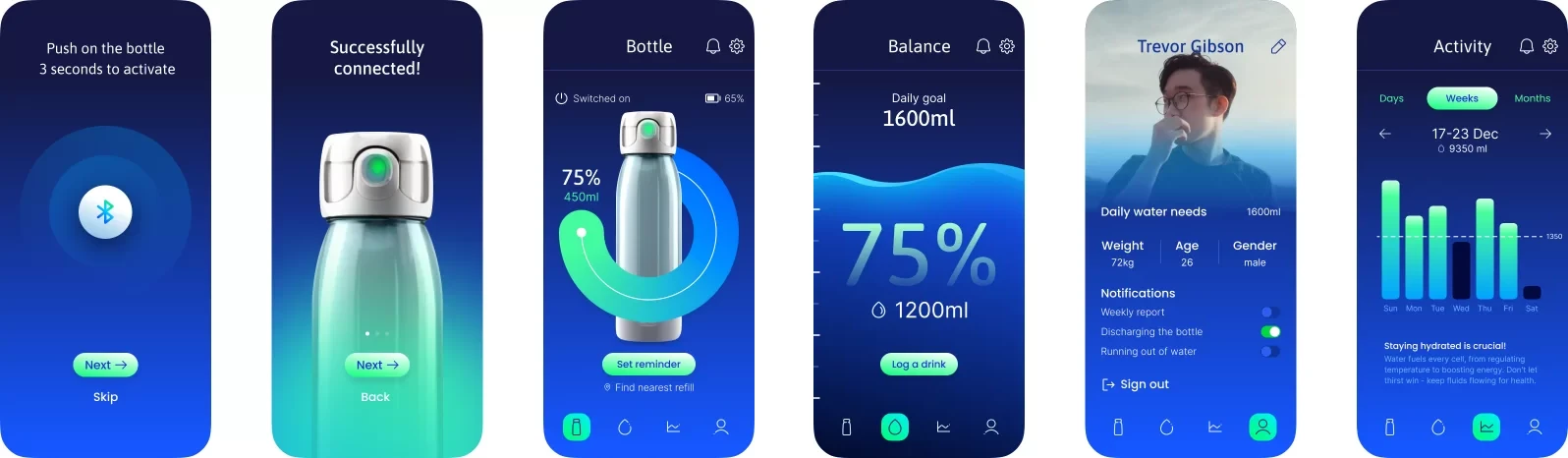
That experience matters when a connected audio product requires more than integrating a ready-made SDK. We can work with the communication protocol itself and build the application-side logic around the actual behavior of the device.
Reusable Bluetooth SDKs
Connectivity logic does not always belong inside a single mobile application.
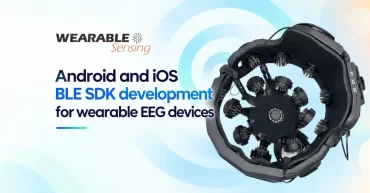
For an EEG device project, ABCloudz developed separate Kotlin and Swift SDKs that encapsulated Bluetooth integration for Android and iOS.
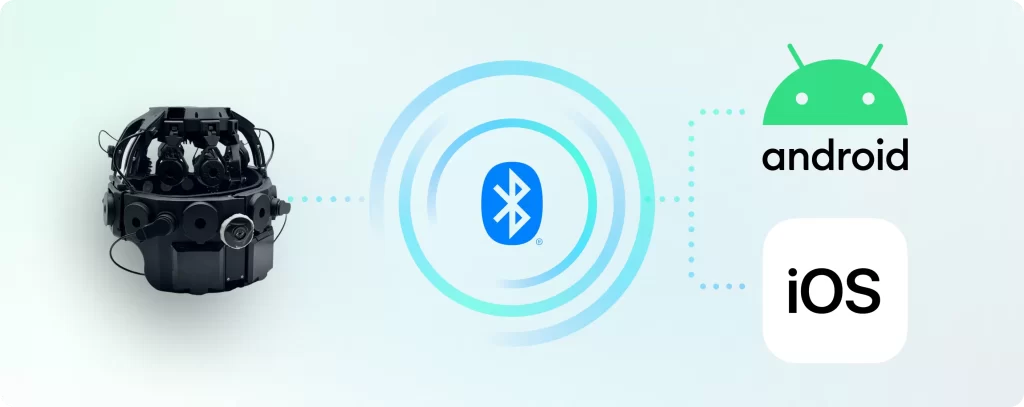
The SDKs handled device discovery, connection management, commands, subscriptions, and continuous data streaming. They also reconstructed data that arrived across multiple BLE packets before passing complete information to the application.
This approach separates device communication from product-specific UI and business logic.
For a hardware manufacturer, the same pattern can make connectivity reusable across multiple applications or product generations instead of rebuilding the Bluetooth layer each time.
Firmware and low-power embedded development
A mobile developer can compensate for some device behavior. Other problems have to be solved inside the device.
Our embedded projects include firmware that manages Bluetooth communication, device state, sensors, offline operation, and power modes.
We have also worked specifically with low-power BLE systems, including Nordic Semiconductor hardware. That work covered advertising behavior, transmit power, deep sleep, current consumption, battery characteristics, and firmware-level power management.
These concerns become especially important for compact battery-powered products where connectivity behavior and battery life directly influence each other.
Hardware and edge processing
Our connected-device work can extend below firmware when the product requires it.
For Alt-Bionics, for example, ABCloudz contributed to hardware design, custom PCB (Printed Circuit Board) development, firmware, Bluetooth connectivity, and mobile application development.

We have also explored embedded audio processing directly. In a keyword spotting project, we worked with microphone input, audio sampling, digital signal processing (DSP), mel-spectrogram generation, TinyML inference, and deployment on a Cortex-M4-class embedded platform.

That project is not a production headphone DSP case, and we do not present it as one. It does demonstrate our ability to work with audio data and signal processing within the constraints of embedded hardware.
We can join at different stages of your product
A connected audio project does not have to start from a blank sheet.
ABCloudz can enter at the layer where additional engineering is needed.
You already have the hardware and SDK
We can build the native iOS and Android companion applications, integrate the manufacturer’s SDK, implement the product experience, and prepare the apps for production release. This is close to the model we used for parts of the Dusker work.
You already have the device and firmware
We can build the software around firmware distribution, including mobile delivery, backend services, release management, administrative tooling, and user notifications. The Heavys OTA workflow is an example of this pattern.
Your device needs a custom communication layer
We can work with BLE services, characteristics, commands, events, packet structures, state synchronization, and other protocol-level requirements. When useful, we can package that connectivity into reusable native SDKs instead of tying it to one application.
You need engineering on both sides of Bluetooth
Some issues appear in the mobile application but originate in firmware. Others require coordinated changes to both sides of the connection. Our mobile and embedded experience allows us to approach the communication boundary as one system rather than treating the app and the device as unrelated projects.
You are building a new connected product
We can contribute across the companion application, Bluetooth integration, backend, embedded firmware, and selected hardware engineering tasks. That gives product teams the option to keep more of the connected-device stack within one engineering relationship instead of coordinating separate vendors for every layer.
Build your connected audio product with ABCloudz
Whether you need a companion app for existing hardware, reliable Bluetooth integration, an OTA firmware workflow, or engineering across the device and application layers, ABCloudz can help build the software around your connected audio product.
Tell us what you are building and where you need engineering support.